

What does it actually cost to buy and renovate a fixer-upper rental property in Granada Hills in 2026, and will the rent cover it?
Expect to invest roughly $935,000 to $945,000 all-in for a renovated Granada Hills rental, and monthly expenses will likely exceed median rents unless you buy well below market and execute a disciplined renovation.
Why This Matters Right Now in Granada Hills
I have spent 48 years in this business, all with Park Regency Realty, and I can tell you that Granada Hills has never drawn this much investor attention. The neighborhood’s 1950s to 1970s ranch-style housing stock is aging into prime fixer-upper territory at the same time that rents across the San Fernando Valley keep climbing.
But here is the reality that separates smart investors from the ones who lose money: the numbers in Granada Hills are tight. As of September 2026, Resideline tracked 268 closed sales with a median sold price of $1,000,000 and a median sold price per square foot of $545. Meanwhile, median rent sits at $2,665 per month, per Resideline. That gap between purchase price and rental income is the whole ballgame, and it is why your renovation budget, your acquisition price, and your financing strategy all have to work together.
So does the math pencil out? Let me walk you through every dollar.
What You Should Expect to Pay for a Granada Hills Fixer-Upper
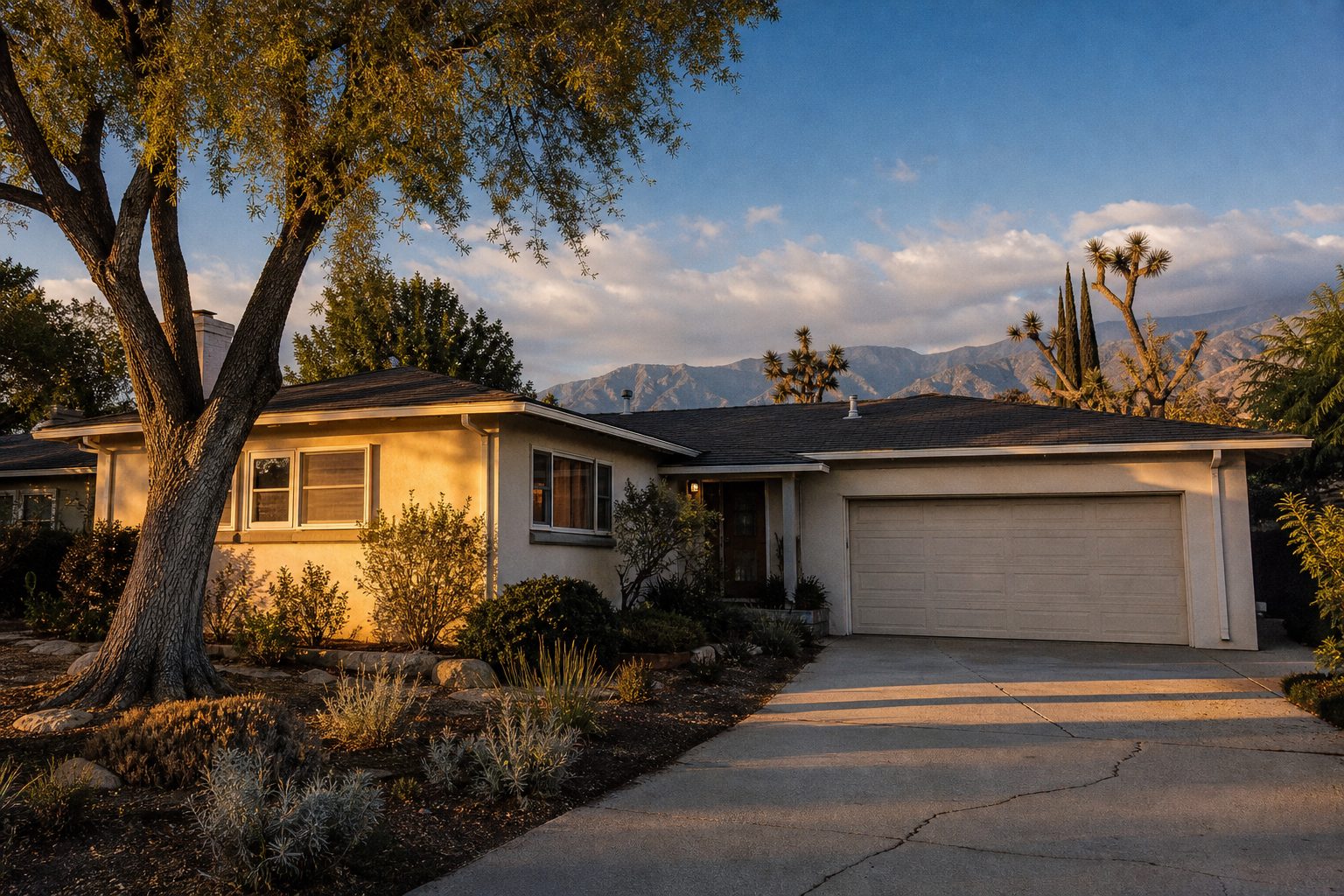
You are not buying at the median. You are hunting in the bottom quartile. According to Resideline data from the last six months, a quarter of Granada Hills sales closed below $879,000, and the full range of sales in ZIP 91344 ran from $379,000 to $3,350,000. The 1950s to 1970s tracts in Granada Hills South typically trade between $850,000 and $925,000 in average condition, per local market tracking. A home needing significant work, think outdated kitchen, original plumbing, deferred maintenance, would logically trade at a 10 to 20 percent discount. That puts your realistic fixer-upper acquisition in the $680,000 to $830,000 range.
Here is something worth noting: Resideline reports that 10% of the 268 closings in this window never appeared on a listing service. These include foreclosure deeds and estate transfers, and they often represent the best investor opportunities. Having closed over 1,200 transactions in this market, I can tell you that off-market deals are where patient investors find their margins.
What I tell my clients is to target a purchase price around $750,000 for a 3-bed, 2-bath, roughly 1,500 square foot ranch that needs a full cosmetic overhaul. That price point exists, but you have to move quickly and know what to look for.
Granada Hills Renovation Costs You Need to Budget For
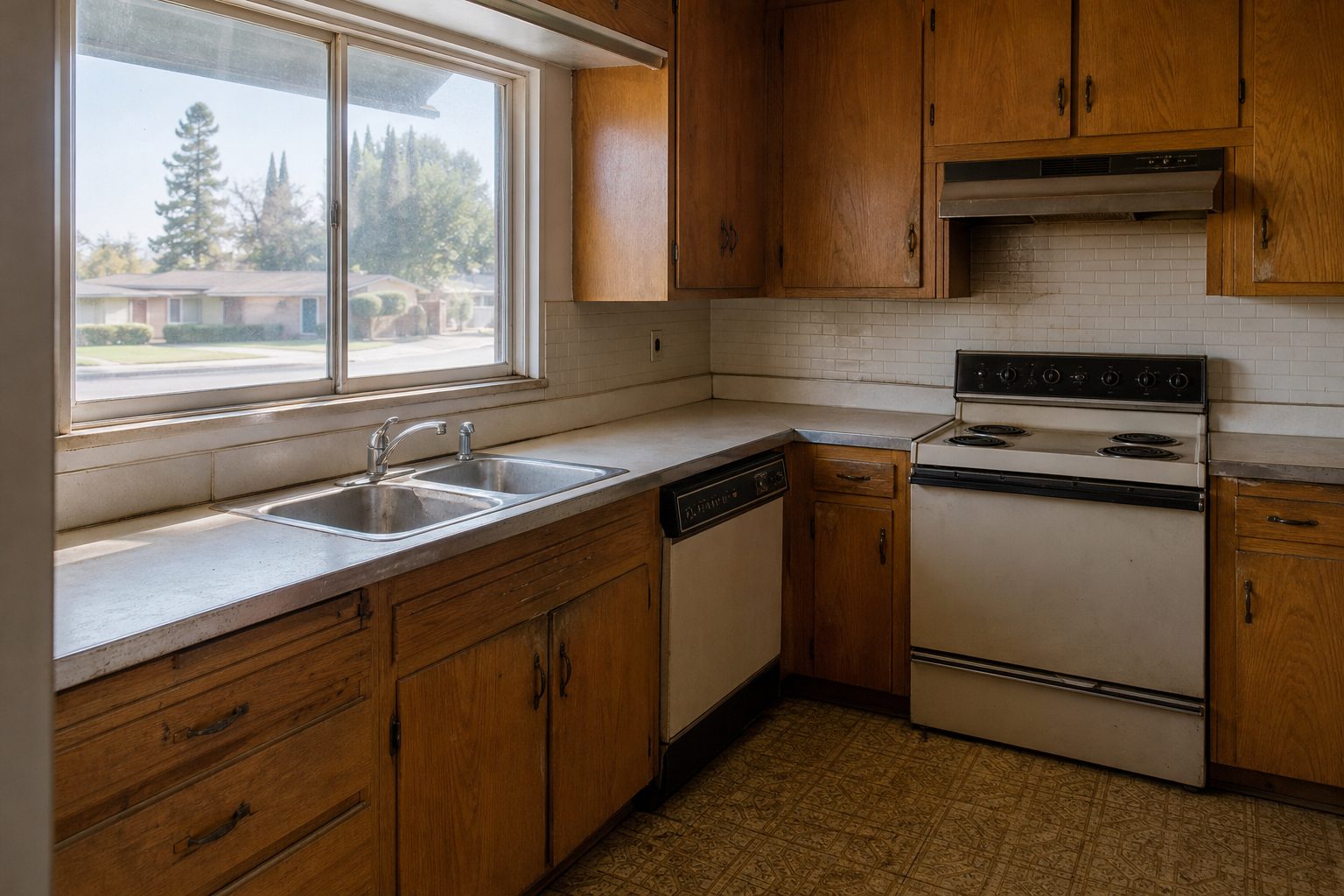
Renovation costs in LA County in 2026 are not gentle. Based on current contractor pricing for a full cosmetic renovation of a 1960s ranch-style home, here is what you should plan for:
- Kitchen remodel (mid-range): $35,000 to $55,000
- Two bathroom remodels: $20,000 to $35,000
- Flooring, whole house at roughly 1,500 square feet: $12,000 to $20,000
- Interior and exterior paint: $9,000 to $15,000
- Landscaping and curb appeal: $5,000 to $10,000
- HVAC replacement: $8,000 to $15,000
- Electrical panel upgrade: $3,000 to $5,000
- Plumbing updates: $5,000 to $10,000
- Roof repair or replacement: $10,000 to $25,000
- Permits and contingency at 15%: $15,000 to $25,000
Total renovation range: $122,000 to $215,000. A solid mid-range estimate lands at $150,000. That gets you a rent-ready property that competes with move-in-ready homes in the neighborhood. Fixers are my specialty, and I always tell investors to budget for the mid-range and then add a contingency. Older Granada Hills homes almost always have at least one surprise behind the walls.
Your All-In Investment and Monthly Cash Flow in Granada Hills
Here is the full picture of what you are putting into this property:
- Purchase price: $750,000
- Closing costs at roughly 2%: $15,000
- Renovation: $150,000
- Holding costs during 4 to 6 months of renovation: $20,000 to $30,000
- Total all-in: approximately $935,000 to $945,000
Now the question you are really asking: will the rent cover it?
After renovation, you would refinance at 75% loan-to-value on an appraised value of approximately $1,000,000. Your monthly expenses would break down roughly like this:
- Mortgage payment at 6.5%, 30-year, $750,000 loan: approximately $4,742
- Property tax at 1.25% of assessed value: approximately $1,042
- Insurance: approximately $250
- Maintenance reserve at 5%: approximately $150
- Vacancy reserve at 5%: approximately $150
- Property management at 8%: approximately $240
- Total monthly expenses: approximately $6,574
Resideline reports the median rent in Granada Hills at $2,665 per month across all home sizes. A fully renovated 3-bed, 2-bath single-family home would likely command $3,200 to $3,600 per month. Even at the top of that range, you are looking at a monthly shortfall of roughly $2,974 to $3,374.
That is a negative cash flow position. So why would anyone do this?
How Experienced Investors Make the Granada Hills Numbers Work
The answer lies in strategy, not wishful thinking. Here is how I have seen investors succeed after 48 years of guiding people through exactly these kinds of deals.
Strategy 1: Buy deeper below market. If you can acquire a property at $650,000 or below, perhaps through an off-market estate sale or a property with significant deferred maintenance that scares away retail buyers, your refinance loan amount drops and your monthly payment shrinks meaningfully.
Strategy 2: Add a permitted ADU. Granada Hills lots typically range from 6,000 to 10,000 or more square feet, per local neighborhood data. An accessory dwelling unit can add $1,800 to $2,400 in monthly rental income, fundamentally changing the cash flow equation on a single property.
Strategy 3: Play the long game. Granada Hills showed year-over-year appreciation of roughly 3.0% as of May 2026, per local market data. Your monthly cash flow may be negative, but your equity position improves annually. Some investors treat the shortfall as forced savings into an appreciating asset.
Strategy 4: Consider nearby markets. In North Hills, Resideline tracked a median sold price of $827,500 over six months, with the bottom quartile below $675,000. Newhall in the Santa Clarita Valley has an average rent of $2,388 per month with lower acquisition costs. These neighboring markets may offer tighter spreads for the same renovation dollar.
Comparing Granada Hills to Nearby Investment Markets
You should not look at Granada Hills in isolation. Here is how it stacks up against the surrounding areas I work in across the San Fernando Valley and Santa Clarita.
North Hills posted a median sold price of $827,500 with a median price per square foot of $465, per Resideline data from the last six months. PropertyShark data for Q2 2026 showed the median at $850,000, down 2.1% year-over-year. That softening creates opportunity.
Northridge had a median closing price of $1,060,000 across 285 sales over six months, per Resideline. However, the lower quartile dipped to $785,301, meaning sub-$800,000 fixer-uppers do exist here.
Santa Clarita Valley is interesting for investors. The overall median sale price for all residential properties was $815,000 in June 2026, per the Santa Clarita Valley Division of the Southland Regional Association of REALTORS, representing a 2% decrease year-over-year. The valley currently has 3.7 months of inventory, approaching balanced-market territory. Valencia rents average $2,796 per month, per RentCafe data.
As the 2019 Past President for the Southland Regional Association for REALTORS, I tracked these market shifts closely, and what I see today is that the best investor opportunities often sit just outside the most popular neighborhoods.
Tax Concerns and Regulatory Realities for Granada Hills Landlords
Before you write a check, you need to understand the regulatory landscape. This is where investors from outside LA County often get caught off guard.
- Property tax in LA County runs at an effective rate of 1.25%, which means $12,688 per year on a property assessed at roughly $1,000,000
- Utilities for a typical 3 to 4 bedroom Granada Hills home run $230 to $340 per month, covering LADWP electric, SoCalGas, and water
- California’s AB 1482 Tenant Protection Act caps annual rent increases at 5% plus CPI, with a maximum of 10%, for properties 15 or more years old
- LA City’s Rent Stabilization Ordinance generally exempts single-family homes, but you must verify
- LA City’s SCEP program requires annual inspection fees for rental properties
- Santa Clarita sits outside LA City limits, so the RSO does not apply, and only state-level AB 1482 protections govern, making it somewhat more landlord-friendly
Frequently Asked Questions
What is the median home price in Granada Hills in 2026?
As of September 2026, Resideline tracked a median sold price of $1,000,000 across 268 closed sales in Granada Hills. The median sold price per square foot was $545. The middle half of sales closed between $849,999 and $1,190,000, meaning significant price variation exists depending on condition and location within the neighborhood.
How much does it cost to renovate a fixer-upper in Granada Hills?
A full cosmetic renovation of a 1960s ranch-style home in Granada Hills runs between $122,000 and $215,000, with a solid mid-range estimate of $150,000. This covers kitchen, bathrooms, flooring, paint, HVAC, electrical, plumbing, roofing, and permits. Older homes frequently have hidden issues that push costs toward the higher end.
What is the median rent in Granada Hills?
Resideline reports the median rent in Granada Hills at $2,665 per month across all home sizes. A fully renovated 3-bedroom, 2-bath single-family home would likely command higher rents in the $3,200 to $3,600 range, though this still falls short of covering typical monthly expenses on a $750,000 purchase with renovation.
How long do fixer-uppers sit on the market in Granada Hills?
Move-in-ready homes in Granada Hills typically sell in 14 to 22 days at or above asking price, per local market data. Homes needing significant work or priced above their condition tend to sit 45 to 60 or more days. That extended market time creates negotiation leverage for investors willing to take on renovation risk.
Is Granada Hills a good market for rental property investment?
Granada Hills offers strong long-term appreciation, with roughly 3.0% year-over-year gains as of May 2026 per local market data. However, the gross rent multiplier of approximately 31 makes monthly cash flow challenging without creative strategies like ADU additions or deeper-than-median acquisition prices. It is an equity-growth play more than a cash-flow play.
What are the property taxes on a rental property in Granada Hills?
LA County’s effective property tax rate is 1.25%. On a property assessed at $1,000,000 after renovation, that translates to approximately $12,688 per year, or roughly $1,042 per month. This is a significant line item in your cash flow analysis and should not be overlooked.
How does North Hills compare to Granada Hills for investors?
North Hills offers a lower entry point with a median sold price of $827,500, per Resideline data from the last six months. PropertyShark reported the Q2 2026 median at $850,000, down 2.1% year-over-year, and price per square foot down 6.5% year-over-year. That softening, combined with lower acquisition costs, may produce tighter rent-to-price ratios.
What financing options exist for fixer-upper rental properties?
Investment property loans typically carry a 0.5 to 0.75 percent premium over owner-occupied rates, with 20 to 25 percent down required. Hard money or bridge loans for renovation typically charge 10 to 14 percent interest with 1 to 3 points on 12 to 18 month terms. DSCR loans, which qualify based on rental income rather than personal income, are increasingly popular among investors.
Does California rent control apply to single-family rentals in Granada Hills?
California’s AB 1482 Tenant Protection Act caps annual rent increases at 5% plus CPI, maxing at 10%, for properties 15 or more years old. LA City’s Rent Stabilization Ordinance generally exempts single-family homes, but you must verify your specific property. If you are considering Santa Clarita instead, only state-level AB 1482 applies there.
How many months of inventory does the Granada Hills market currently have?
As of October 2026, Resideline tracked 33 active listings and only 1 pending sale in ZIP 91344. That pending-to-active ratio of 0.03 points to a balanced market where buyers have room to compare options and negotiate, per Resideline. For the broader Santa Clarita Valley, inventory sits at 3.7 months, also approaching balanced territory.
The Bottom Line
The honest answer is that a Granada Hills fixer-upper rental in 2026 will not cash flow positively on a conventional basis. Your all-in cost of roughly $935,000 to $945,000 generates monthly expenses around $6,574 against likely rents of $3,200 to $3,600. You are playing an appreciation and equity-building game, not a monthly cash flow game, unless you add an ADU or find a truly exceptional off-market deal.
I have been guiding investors through exactly these calculations for 48 years, and my advice is simple: know your numbers before you write an offer, not after. If you want to explore what is actually available right now in Granada Hills, Northridge, North Hills, or the Santa Clarita Valley, call me at 818-356-6356. I am Dan Tresierras with Park Regency Realty, and finding the right fixer at the right price is what I do best.

Leave a Reply